


Contact Us at 917-860-2782 or vshtainer@compass.com

Real Estate Market Braces for Return of Foreign Buyers

An Ariel View of Central Park

Key Luxury Markets around the Country including New York City are expected to benefit from boost in demand from Oversees Buyers

For key luxury markets around the country, especially New York, Foreign Buyers have been a key part of the Buyer pool. For the past nearly 3 years, this Buyer has been virtually absent from the New York Luxury Market.

The pandemic and associated travel restrictions prevented foreigners from physically coming to the United States. While some deals did occur virtually by foreign Buyers, that has been small compared to deal volume when travel bans were not in place.

We expect that dynamic to change and the foreign Buyer to return with strength now that the United States has lifted the travel ban on approximately 33 countries for fully vaccinated visitors. With the travel ban lifted, foreign buyers can once again enter the country and physically see and buy properties. We expect this to have a positive impact on the New York luxury market as many want to invest their dollars here.

For a luxury market that has continued to set records throughout 2021, we anticipate the return of the foreign buyer to be an additional boost of demand as we end 2021 and enter 2022. 

This could add tens of billions of dollars in transactions to the market.According to the National Association of Realtors, foreign Buyers spent $267 Billion on American Real Estate in 2018 and in 2019 they spent $183 billion. 

Luxury Kitchen in a High-end Home

Wealthy Foreign Buyers are interested in high-end homes and New Construction

What We Expect from the Return of Foreign Buyers to the United States

  • New demand in key luxury markets across the country such as New York, Miami, and Los Angeles

  • New Construction will likely be the main beneficiary of this new demand as foreign Buyers prefer new product

  • Thanks to increased asset prices across both real estate and equity markets since prior to the pandemic, many foreign buyers have elevated wealth

  • The economic impact of travel resuming should be a positive for multiple sectors of the market - tourism, retail, and ultimately real estate.

My Lease is Expiring: Should I Stay in my Apartment or Rent Something New?

If you are currently a Renter or have rented a property before, you. Know that dreaded feeling when your lease expiration date is quickly approaching. With the expiration of your lease approaching comes the question, and decision, of: should I stay in my existing apartment, or find a new apartment to rent?

 It is important to remember there are two sides that are influencing here – you as the Renter, and the Owner or Landlord. This can be a tough decision to make as it is influenced by multiple factors – we discuss how to think about decision so you can enter your next lease with confidence.

Factors Influencing the Owner or Landlord 

When thinking about renewing an existing lease with a tenant, an Owner must weigh various costs. The owner is looking at these factors for you to stay:


1. Broker Fee: Depending on the state of the Rental market, it is likely that the Owner will need to offer a concession to secure a new tenant. This is typically paying the Broker’s fee so the new tenant does not have to. This is one’s rent or 15 percent of the annual rent.


2. Standing Empty: What is the risk of the unit sitting vacant for 1 month? 2 months? Even longer? When the empty is unoccupied, the Owner risks losing income.


3. Current Market Conditions: The Owner must have a pulse on the current state of the rental market at the time of your renewal – is it favorable to Owners or Tenants? This impacts the dynamic of their being able to increase the rent, how quickly they may be able to find a new tenant if they do not offer to renew, etc.


4. What is the last price a comparable apartment rented for? Perhaps you entered your lease when the market was lower, and the Owner may be able to rent at a much higher price in the current market. However, Owners prefer a good, known tenant that they dealt with rather than a new unknown tenant. This is where the tenants’ discount lays.

What to Consider as a Tenant

As a tenant, is important to approach the expiration and possible renewal of your lease with an understanding of the following questions.

1. How long do you need to extend for? One year? Six months? Month to month? The shorter the lease, the more it will cost monthly.

2. Current market value for your apartment that you are renting: If you have been paying significantly less than what it could rent for today, it is not unreasonable to expect some increase in the monthly rent on your new lease.

3. Cost of moving: Perhaps one of the biggest considerations that is often overlooked. Is saving $200/MO on rent really worth the cost of moving?

The costs of moving include more than just the fee paid to the Movers. There are both financial and mental costs.

Think about Security deposits, packing, finding movers, moving fees, broker’s commission, time lost from work, possible condo application fees, unpacking. Often times, this costs will largely outweigh the annual cost of an increase in rent.

4. How long do you plan on staying? Does your timeline have moving to a new location in 2-3 years, or perhaps moving in with a partner or buying a property? If so, it may make sense to stay in your existing apartment despite an increase in Rent. Again, the costs and stress of moving may not outweigh an increase in rent.

Summit One Vanderbilt Observation Deck Opens in Midtown Manhattan

A new observation deck has opened in New York City that once again raises the benchmark. Summit is located on the 91st-93rd floors of One Vanderbilt, a new high-rise office building in Midtown Manhattan. Perched 1,200 feet in the air, Summit is the highest vantage point in Midtown.

What sets Summit apart from some of New York’s other famous observation deck is the experience one you get to the top.

Jump onto the elevator from the Grand Central Terminal and ascend to Summit. 

When elevator doors open, you step into an immersive art exhibit designed by Kenzo Digital.Mirror floors and ceilings provide a unique perspective on your surroundings. Kenzo Digital intended to design a space that would feel dreamlike and an escape from the reality on the ground.

For those looking for a bit more than just gazing out to the skyline and horizon, you can experience “Levitation.” Levitation consists of 2 glass ledges suspended 1,063 feet over Madison Avenue, ensure to offer heart-racing views of the city below. 

Visitors that want to take things even higher can try “Ascent”, glass elevators that scale the outside of the building. They are the largest glass-floor elevators in the world and take passengers up 1,000 feet in just 42 seconds. 

Before you make your way back to the ground, stop by Apres to enjoy a quick bite and drinks by Danny Meyer’s Union Square Events. You can enjoy bites and drinks from open air terraces and indoor lounge areas.

Tickets must be purchased for access and are available at one the Summit One Vanderbilt website. Prices start at $39 and New York City residents can get a $5 discount.

Images via Summit

Condo vs. Co-Op: A Guide for First-Time Homebuyers

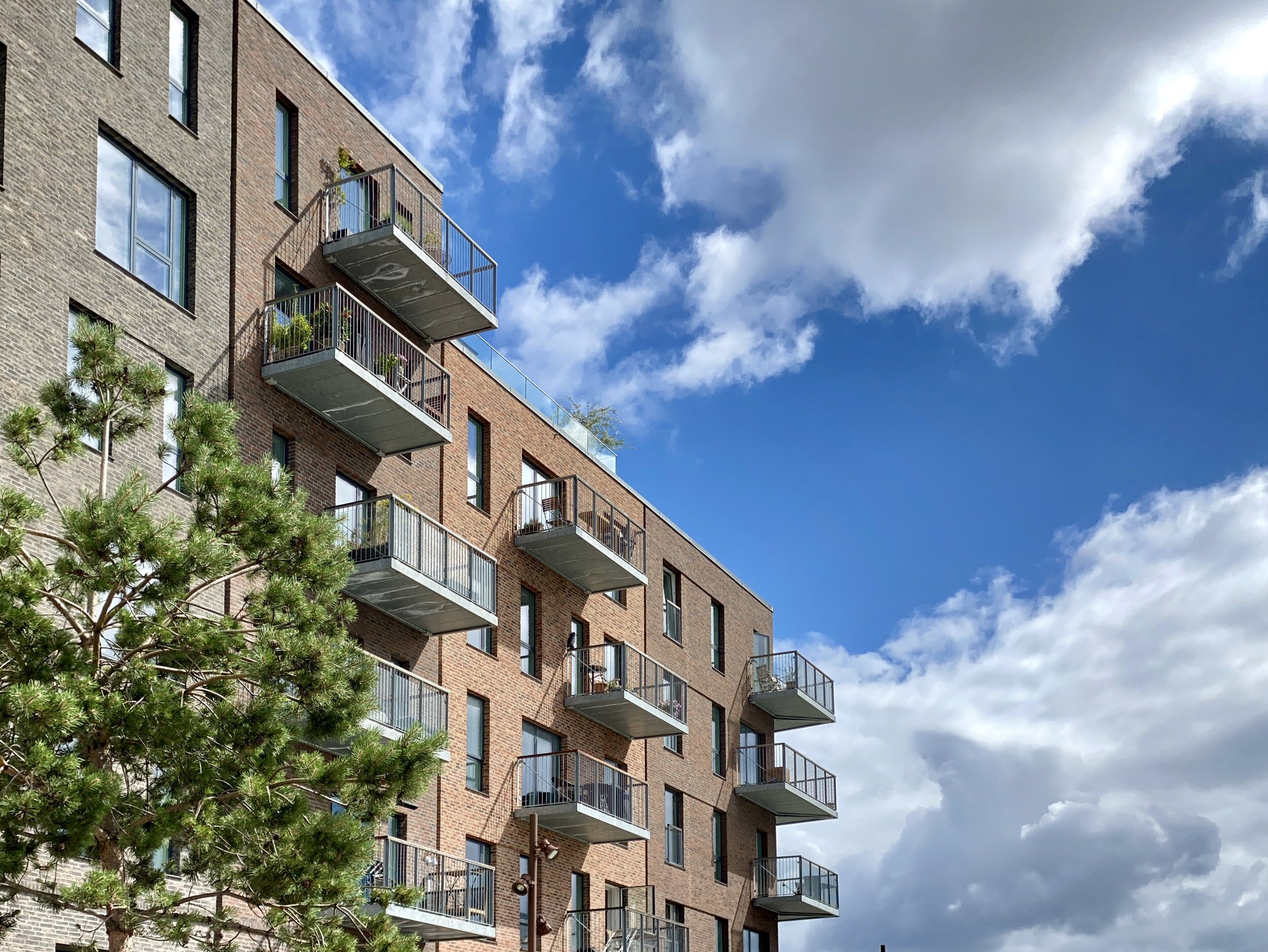
An apartment building under a clear blue sky.

Buying a home is one of the most exciting adventures on which you will go. However, it can also be very stressful and frustrating, as finding the right property can take a lot of time and energy. In New York, we have different property types, and understanding the difference between them is important in making your decision. The market is primarily dominated by two types: Condos and Co-Ops.

If you are still unsure what is the right choice for you, we're here to help. Below, we have prepared the pros and cons of both property types. Understanding their differences and what ownership of each entails will make it easier for you to make the right decision.

Condo vs. Co-Op: the main differences

Co-ops and condos have many similarities, so it can be very difficult to notice any differences at first sight. Of course, as with many things, the devils are in the details.

A cooperative, or a co-op for short, is run by a non-profit corporation. The residents buy proprietary leases from this corporation. In a Co-Op your ownership is not that of real property but shares in the corporation. The proprietary leases are shares in the property. By buying proprietary leases, the residents gain certain rights such as access to communal areas of the building as well as to their individual units.

A brown brick building with a tall tree in front of it

The main difference between Condominiums and Co-Ops is in the structure of the ownership. In a Condo, residents actually own real property and hold the deed to their unit. Additionally, the have an interest in common areas of the building such as hallways and amenity spaces. When you're buying a condo, you are going through the same process as if you were buying a house. The best part is that condominium buildings are everywhere, which is not the case with co-ops. For example, if Manhattan is your dream location, it will be very easy to find a perfect condo – most new construction projects are Condos.

Differences Between Condos and Co-Ops

As said, the main difference between these two types of properties is ownership. However, there are other things that make them different, understanding the full implications of the differences will help you decide which property type is best for your scenario.

●      Price - Condos are usually more expensive, but they give you bigger flexibility as they are much easier to sell or rent. However, have in mind that the down payments for Co-Ops are usually higher.

●      Fees - In co-ops, all monthly expenses are rolled into one bill known as the “Monthly Maintenance”. Also, the utilities are charged as per the percentage of share a resident owns. For example, if they own 3% of the property, they'll pay 3% of the electricity or water bill.

●      Taxes - When it comes to condos, as they're owned individually, the property taxes are charged in the same way as you would pay for a single-family home. As co-ops are considered a single property, property taxes tend to be lower as they are shared between the residents. In a Condo, you will typically face two monthly charges: the real estate taxes as well as monthly Common Charges.

●      Board Approval: Both property types have boards and your purchase will be subject to board approval, however, Co-Ops are notorious for having very strict boards and they do not have to disclose why they approve or disapprove a potential resident.

What to have in mind before making your decision?

Now that you know the main differences, here are a couple of more details to consider before making a final decision between condo vs. co-op. 

Consider your budget

Every home buying process starts with budget questions. Therefore, make sure to assess how much you can spend by consulting with your Mortgage Broker and Real Estate Agent in order to set your home search up for success. Before you choose a lender, make sure to check with at least three to ensure you are receiving the most competitive rate.

By thoroughly analyzing your budget, you'll have a clear picture of how much you can spend and what kind of property you can purchase.

By thoroughly analyzing your budget, you'll have a clear picture of how much you can spend and what kind of property you can purchase.

When setting your budget, make sure to take other factors besides your mortgage into consideration. Keep in mind that co-ops are less in demand and therefore cheaper. However, owning a condo comes with low maintenance costs. You need to weigh both options and figure out what works best for you in the long term.

Also, be mindful of the size of the property you can get for your money. Perhaps the home you used to rent was big, and now you have to downsize. Therefore, you might not have enough room for all your belongings. An easy and inexpensive solution is to rent a storage unit. However, make sure to do your research and notice warning signs before making your choice. For example, if you see any water damage in the unit, that should be an immediate red flag. As you want your belongings to be kept safely, you need to choose the most reliable storage company you can find.

Consider how much responsibility you are willing to accept

The number of responsibilities you'll get with a property might help you resolve the condo vs. co-op dilemma. When you live in a co-op, it almost feels like being a part of a club or society. Every big decision such as a renovation or accepting new tenants has to be made jointly by all residents. Afterward, the elected board will act on any decision residents make.

If you decide to live in a condo, you can choose if you want to decide about these issues on your own or let the condo board make the calls. You may wish to be excluded from these decisions and be responsible only for your own property. It's your decision how much you want to be engaged.

Living in a co-op means that you'll have to participate in every decision regarding your building.

Living in a co-op means that you'll have to participate in every decision regarding your building.

Therefore, make sure to do your research and find out what kind of expenses and obligations you are getting with your first home. Nowadays, all information can be easily found online. You can even buy a property remotely if you wish! Your real estate agent will be able to advise on the monthly common charges or maintenance costs for a given unit.

However, if you are a first-time home buyer, we definitely recommend hiring an experienced real estate agent to help you.

4 Reasons Why Today is Not a Housing Bubble Like 2006

unsplash-image-wKO0rx50VWo.jpg

Headlines about the rapid pace of home price appreciation and stories of bidding wars on every property have many worried that a housing bubble could be brewing. Are we heading for the 2006 housing crash all over again? No!

Today’s market looks quite different than 2006 thanks to stricter lending rules and the underlying fundamentals that are driving pricing.

1. Supply and Demand

There has been a shift in Supply and Demand dynamics that contributed to home price increases. Millennials and younger generations are reaching the point of wanting to buy versus rent, and this was only accelerated by aspects of the pandemic such as spending more time at home and having the ability to save more money by being home. Increased desire for homeownership from these groups coupled with older buyers looking to trade up has resulted in a surge in demand.

Additionally, homebuilders are much more prudent about the volume of homes they are bringing to market today as a result of the last housing cycle. Most of the nation is experiencing a supply shortage, especially at lower price levels.

These 2 dynamics created a mismatch in supply and demand that accelerated home price appreciation. 2006 was characterized by overbuilding and Sellers rushing to list their homes - we are not seeing that today.

2. Interest Rates are Low

Interest rates are the lowest they have ever been. During the height of COVID, we saw mortgage rates continue to set record lows. These ultra-low rates have helped fuel price increases as Buyers can afford more house when rates are lower as a result of lower monthly mortgage payments.

There are concerns over rising interest rates. Yes, we expect rates to rise, but they are still going to be low compared to decades of the past. The Fed would have to raise rates very drastically to really halt all the demand.

Even when we think of rising rates, it is important to remember there is a duality at play. To a certain level, increasing home prices as a result of low interest rates and a less expensive purchase price at a higher interest rate make a Buyer indifferent.

Prudent Buyers understand that the longer they wait, the more price appreciation they will miss out on as well as face the risk of financing at a higher rate.

3. Demand will Persist

There continues to be incredibly large amount of demand because of a supply shortage. In fact, data from a report released by the National Associations of Realtors suggests that there is a shortage of nearly 5.5-6 million homes which equates to roughly $2 trillion waiting to be spent when using a national median selling price of $375,000.

4. Speculative Lending is not Present

The market is not driven by speculative lending as it was in 2006. In fact, it is quite the opposite. Lenders now need to follow strict guidelines that were put in place as a result of the Great Recession, and today’s borrowers are creditworthy. Additionally, more risky products such as adjustable rate mortgages represent just 5% of total purchase and refinance loans compared to nearly 35% at the peak of 2006.


How to Design a Home that Reflects Your Lifestyle

via

If you've recently acquired a brand-new property, you've probably already got a picture of what you would like it to look like. But have you ever stopped to think whether your idea would count towards being practical? If you are like most people looking to design a home, the answer is probably ''no''. Chances are you have focused on aesthetics rather than functionality.

While there is no definition of a perfect home, if we had to define it, it would be a place that perfectly complements one's lifestyle. A place that makes us feel utterly comfortable. One we feel drawn to even when we are hundreds of miles away. Designing your unique living space isn't as hard as it seems. And no, it doesn't take an interior designer to call the process a success. The questions we have prepared will help you design a home that completely reflects your lifestyle. With that in mind, let's dive deeper to see what they are and answer them along the way!

Are You Someone Who Likes Hosting Get-Togethers?

If so, you should pay special attention to the layout. Open floor plans work best since they allow more people to be present in the same room simultaneously. In addition, your guests would also have an easier time navigating the place with such a layout. Of course, not everyone likes the company of others at all times. For those who prefer being alone, dedicate an area you'll turn into an intimate spot that they can enjoy. Essentially, you want to make your guests feel at home. That's why it's essential to stay clear of furniture and decorations that appear too formal. If possible, connect the place with a balcony or the garden, allowing people to wander if and when they please.


unsplash-image-tAH2cA_BL5g.jpg

Are You an Introvert?

Yes? Well, then you'll appreciate the presence of a more serene setting. Design a home that features personal touches that appeal to you, considering you'll be spending most of your time here. If you like reading, a comfy nook may be just what you need! To further enrich the space, incorporate a bookshelf into the area as well.

To make sure you feel comfortable in your new home, work towards cozying it up - top to bottom. An easy way to do this is to equip the living room with a grand sofa you'll spend plenty of evenings on. Improve the air quality through the introduction of plants and flowers, and cover the walls with artwork. Scented candles can only further liven up the area, so think about bringing them to the place, too.

Plants and Artwork help make you feel right at home. via

Plants and Artwork help make you feel right at home. via

Does Your Work Take Place at Home?

If you spend plenty of time conducting business remotely, make sure the final design features a home office. With a space dedicated solely to work, you'll have an easier time focusing on individual tasks. You'll finally be able to enjoy some peace and quiet without anyone interrupting you every so often. Not to mention your back, which will surely thank you for replacing that dreadful coffee table and a stool for an actual desk and a chair.

If you work remotely, chances are your business will benefit from the addition of a home office

If you work remotely, chances are your business will benefit from the addition of a home office

Do You Share Your Home with Elderly or Small Children?

The way you design a home depends mainly on whether you live with adults, the elderly, or kids. If you share your house with the last two, you want to take extra measures to ensure they remain safe. Cover the sharp edges of your furniture with specialty covers to prevent the little ones from sustaining injuries. Also, don't forget about baby-proofing the power sockets! As for the elders, you can install a special seat in the shower for them. Additionally, place mats on floors that feel even remotely slippery to avoid potential slip-and-fall accidents.

Does Religion Play a Huge Role in Your Life?

If the answer is ''yes'', you'll possibly want to create a space that lets you fully commit to your beliefs. Praying is part of many religions, and in some, requires a secluded area. If the current layout allows you to create one, great! If not, perhaps you'll have to turn to renovating to accomplish that.

While you deal with remodeling, you'll certainly need a temporary solution for your possessions in terms of storage. Valet storage could prove the right one. It's cheaper than the standard options and ideal when looking to store fewer items for a short period of time.

Are There Any Colors You Prefer?

Maybe there's a color or two that you are keen on. If so, you'll want to include it when you design a home - your home! You may be tempted to follow the latest color trends, but it might be better to listen to your gut here. Of course, that doesn't mean you should paint your entire house red, inside out, if that's your favorite hue! If anything, that will only make it appear overwhelming. You are encouraged to use any vibrant color you wish, but it's highly recommended you tone it down a bit with neutral shades. Experiment with different tones by holding the color charts one next to the other. If, when combined, they appeal to you and feel right, they probably are!

Conclusion

There are many things you want to consider when looking to design a home that reflects your lifestyle. Of course, as we age, our lives change. But so should our homes! Don't be afraid of mixing things up! Adapt your living space based on your preferences at the time. Only by doing that can you be at peace and feel like that is where you truly belong.

Best Indoor Plants for Luxury Apartments

via

Although often overlooked, plants play an essential part in designing the perfect luxury apartment. In fact, plants are instrumental to creating a living space that is homely and chic at the same time. Luxury apartments that do not have plants often seem cold, pretentious, and uninviting. So, not only do indoor plants improve the air quality of your home, but they also improve the overall aesthetical cohesion and appeal of the place.

Why are plants important for our living space?

Interestingly, plants and humans live in a symbiotic relationship. This means that plants keep us alive as much as we keep them alive. This is especially true when it comes to indoor plants. Not only do they use up the carbon dioxide we produce while breathing, but we also plant, water, and fertilize them. In return, they give us oxygen, which improves our health, mood, attention, and sleep. Not to mention they make our living space look refined and luscious on top of healthy and pleasant! 

Hence, if your plan is to update your apartment by, for example, designing a cozy reading nook  know a few plants you should opt for to make your space feel luxurious. 

Some indoor plants can improve your health and your interior decor via

Some indoor plants can improve your health and your interior decor via

Jade Pothos Totem

What better way to evoke luxury and extravaganza in your apartment than by ‘junglefying’ it? Planting this potted cutie will help you set the stage for your tropical oasis even despite the fact you might be living in a skyscraper in Manhattan. 

Apart from having a gloriously chic name, this plant is also very easy to take care of. Its appearance is lovely and apartment-friendly due to the fact it has a vertical pattern of growth. This means you will be able to fit it almost anywhere you need to add a little bit of life. 

 It’s a great corner plant - it never overgrows into width, so it never looks out of place. What’s more, its tall, slender shape and large leaves complement hardwood floors and shelving astoundingly well.

White Philodendron Cordatum

Also great for keeping the integrity of your interior decor, the White Philodendron does not grow too big. It has a very peculiar but sleek appearance as it has green leaves with big white specks. And if you thought that this plant couldn’t get any better, you thought wrong. It is incredibly low-maintenance despite its unique, sophisticated look. 

Any upscale apartment with suave, contemporary design can benefit from having this plant because the white parts of the leaves perfectly complement the white and neutral colors of furniture and interior decor. 

Bird of Paradise

This plant is perfect for homeowners who like both green plants and plants that grow flowers. The leaves and flowers have a unique avian growth pattern, which is why some people consider it ‘plant royalty’. Hence, this plant can act as a great centerpiece for a well-designed guest bedroom. Why, you ask?

The flowers resemble an orange bird’s beak surrounded by green ‘plumage’, a characteristic to which this plant owes its name. The foliage resembles a banana tree but is much more alluring because of the potential to grow mesmerizing flowers. 

The Bird of Paradise grows luscious ‘blood-orange’ flowers. Via

The Bird of Paradise grows luscious ‘blood-orange’ flowers. Via

Together with the dark green of the leaves, which contrasts amazingly with white and off-white, these show-stopping flowers are going to give your apartment that dash of unassuming taste and luxury. However, in order to grow, they need humidity and frequent exposure to the sun. 

This means you might have to make compromises and store away some of your old or excess furniture to make way for this large, slightly tricky, but very rewarding plant. A moving and storage company such as TB Moving & Storage NYC can help you with this mission. 

Chinese Fan Palm 

Plants can help you liven up and reinterpret a reduced, angular architectural style. When they are young, these plants’ size can be compared to a smaller bush. It takes about a decade for them to be classified as trees. 

Chinese Fan Palms are great for retaining your apartment’s sleek, tasteful vibe while adding a dash of exoticism. This plant’s frond (fan-like leaf) is interesting because it has a fountain-like growth pattern. In other words, its leaves spread to form a fan that falls at the edges, strongly resembling water flowing from a fountain. 

Yet, a word of caution before you proudly position this extravagant plant into your living space. Chinese Fan Palms require a lot of exposure to daylight. This means that you might have to remove furniture in places where light can reach your plants. 

Their interesting fan-like shape makes them one of the best indoor plants for luxury apartments. via

Their interesting fan-like shape makes them one of the best indoor plants for luxury apartments. via

Since Manhattan luxury apartments are still not as big as townhouses, you should consult your interior designer about the most optimal placement of furniture to achieve this. If, however, your space isn’t big enough for all of your belongings and this gentle giant, you might even want to consider moving to a slightly more spacious and more luxurious apartment. Manhattan offers various options when it comes to reputable moving companies, so all you will have to worry about is finding the perfect spot for your plants. 

Common Fig

Do not let the name confuse you - fig trees are one of the best indoor plants for luxury apartments. What makes them an outstanding addition to your living room or balcony is their cultural status. Namely, the shape of their leaves is world famous because of the Biblical story of Adam and Eve. It was a fig leaf that obscured Adam’s intimates! This makes this tree not only a beautiful and bountiful addition to your indoor garden (you can eat the figs in early summer) but also a living, breathing cultural artifact! 

Tips for Buying a House Remotely

Buying Real Estate Remotely

Many industries have efficiently adapted to remotely conducting business, and real estate is one of them! Buying a house remotely can be very convenient as it can save valuable time. Buying a home virtually has become more common than you may think. No matter where you may be right now or what you’re looking for in a house, there’s a procedure you can follow to conduct the transaction virtually. Video conferencing, virtual tours, and walkthroughs along with wire transfers and e-signatures made the process of buying a house from afar simpler and easier than ever. If you want to use that advantage, here are a few tips on how to buy a house remotely.

Find an experienced local agent

When you’re buying a house remotely, an experienced real estate agent is your best asset. An agent who knows and understands the local market and the current situation with property values should be your guide for:

  • Home browsing

  • Virtual showings

  • Home inspections

  • Virtual closing 

You can find a good agent through a referral from a trusted person, such as a family member, friend, or colleague.

Did you know? We are your experts on the ground in New York City, we can connect you with the best agents Nationwide thanks to our extensive network of Compass Agents. No matter where you are looking to purchase your next property, let us guide you in the right direction.

Determine what you want

Find a local agent with good referrals and experience in remote sales.

Find a local agent with good referrals and experience in remote sales.

It’s crucial to know what you want and what you do not want when purchasing a home. So, be clear when you make a wish list and discuss it with your real estate agent. Define your must-haves and nice-to-haves, and you’ll significantly narrow down the choice of properties. Clarify your preferences around:

  • Location

  • Home size

  • Property type

  • Home condition

  • Amenities, such as smart home technology features, energy-efficient appliances, etc.


Also, make sure to mention what your dealbreakers are. Be very direct when explaining what you’re looking for in a home, so your agent can understand your priorities and preferences and find only homes worth pursuing and those that match your criteria.

Understand the market

Buying a house remotely doesn’t mean you don’t need to be competitive. The main thing you need to check with your real estate agent is whether the market you’re considering buying a house in is a buyer’s market or a seller’s market. There is an extensive inventory of available homes and fewer buyers looking at them in a buyer’s market. If that’s the case, you will have more flexibility and more time to learn about a property before deciding if you want to put in a bid. On the other hand, there are seller’s markets, where there is more competition, and the inventory of homes is much smaller. That means that buyers need to act fast if they’re really interested in sealing the deal.

When you're buying a house remotely you need to understand the local market and current real estate trends.

When you're buying a house remotely you need to understand the local market and current real estate trends.

Tour homes virtually

Your agent should schedule a virtual showing for the properties that you like. Use the video call as an opportunity to see the house up close, pay attention to details and ask any important questions that you might have. Even though touring a property over a screen isn’t the same as being there, it’s still very valuable. It can even be a make-or-break factor. That’s why you need to ensure that you’re not working with the wrong real estate agent, but a reliable one whose opinion you’ll trust. It’s also essential to establish clear and easy communication with them. They will help you decide whether a particular property is a good fit or not.

Make an offer

Once you find a house that speaks to you, you can move on to paperwork. Luckily, all steps of making, adjusting, and accepting an offer can be done remotely. We handle all the aspects of submitting your offering, helping you negotiate the best deal possible knowing

Have a home inspection

home inspection is always a good idea, especially when buying remotely. A qualified home inspector will check the specifics of a property and find out if there are any significant issues. Your real estate agent can attend the inspection with you on a video call. The inspector and agent are there to work on your behalf, so you don’t have to deal with any unwelcome surprises after closing the purchase.

Appraise and close easily

You and your agent don’t need to be present for the appraisal. When it comes to the closing, digital signatures are as valid as physical ones. You can sign all closing documents virtually, and they will all be legitimate. Closings are done online in many cases, so you being far away won’t make any difference.

E-signatures have made the home buying process much easier.

E-signatures have made the home buying process much easier.

Relocate to your new home stress-free

When you’ve gone through all previous steps, it’s finally time to organize a relocation to your new home. It would help if you decluttered your former home before you even start packing. Don’t bring any broken, damaged, or rarely used items into your new home to avoid creating a mess right away. To pack your belongings quickly and easily, you can contact Capital City Bins NYC. That’s where you’ll find quality moving bins as well as other moving supplies that will help you pack in no time. Then you need to organize a transfer of your belongings and your trip to the new home.

Organize your new space like a pro

Once you and your items safely arrive at the new house, it’s time for unpacking, decorating, and making your new place look and feel like home. That process requires some time but, in the end, it will all be worth it.

Store your items wisely

Everybody’s goal is to live in a highly functional, organized, tidy, and cozy home. To reach that ideal, it’s crucial to use every inch of space. If you’re creative, there are many ways to create hidden storage or multifunctional storage areas. It’s always a good idea to use shelves, storage bins, sofa storage, spaces under the bed, etc. If there’s no clutter lying around, your home will look tidy from the very start, and that will positively affect your mood.

Final thoughts

When you know what to expect and what steps to take, buying a house remotely isn’t complicated at all, especially when you have a reliable real estate agent by your side.

Get your remote home search started by partnering with us!

5 Reasons You Should Use Compass Concierge

Compass Concierge

5 Reasons You Should Be Using Compass Concierge

In today’s fast-paced market, making sure your property stands out in the best light possible is a must. If you are considering listing your home, but renovations have been making you re-consider, we’re happy to offer our Clients exclusive access to Compass Concierge services. This game-changing programs allows us to help our Clients maximize the value of their home on the market.

1. Maximize the value of your home

Easily increase the market value of your home and sell for a higher price.

2. Show your home in its best light.

From painting to flooring, Concierge services can help your home look its best before hitting the market.

5. Compass Concierge is hassle free

From assessing which updates will increase your home’s value the most, to recommending the best vendors for the job, you’ll have my complete guidance and assurance at every step.

3. Sell your home faster.

Concierge helps you attract more buyers so that you can sell your home quickly. 

4. No upfront costs or interest.

Funds will be advanced to you for home improvement services. When your home sells, you’ll pay the costs of services rendered and nothing more. 

Screen Shot 2021-06-20 at 8.47.48 PM.png

Contact us today to learn more about how Compass Concierge can help you make the most of your sale!


How to Create a Cozy Reading Nook

via

Curling up and cracking open a favorite read for hours on end is any book lover’s elixir: it cures, nurtures and preserves. From science fiction, thrillers, and romance novels, to even putting on a mud mask and working through your stack of magazines, reading is a perfect way to slow down, relax and de-stress. Then why not create a cozy reading nook you deserve, and make your beloved pastime that much more enjoyable?

A few essentials are all it takes. In reality, cozy reading nooks are a cinch to build since their anatomy is very simple. All you need is a nice quiet corner, somewhere to sit, good lighting, and a few accessories to make your reading space comfy and functional. The trick, however, is to think about what makes you feel happy and soothed and then incorporate those elements into your reading nook. Below you’ll find some ideas to help get your juices flowing.

Pinpoint a nook for literature and coziness

People generally snatch their reading time wherever they can. But the couches can mean distractions, the desks can remind you of deadlines and productivity, and the beds? Forget it. You’ll doze off after a page. It is generally important to have a space designated for certain activities. Anything works, from a little window seat overlooking your garden, a hall closet you don’t need, or an awkward corner you haven’t got a clue what to do with. The key, however, is to have a special space that is tidy, well-lit, and without any distractions will get you right into your reading zone.

Don’t get carried away, though, thinking that you need much more space. It’s just a matter of being comfortable and incorporating a few extra details that define the space as dedicated to reading. If you’re just about to start looking for a new place to call home, think ahead about the spot that would be perfect to create a cozy reading nook. Then, dive right into it after you’ve moved in.

Leave some table space

Make your reading experience much more comfortable by giving yourself a little side table. Let’s face it: you can’t very well hold a cup of coffee and turn pages at the same time. Plus, you’ll need a spot to place your reading essentials, such as your glasses. Take notes from the stylish nook below - a small end table is functional while a coat of fresh white paint helps to further brighten the space. All it took to warm things up was a a soft yellow fabric on the window seat, a nice throw blanket, and some indoor greenery.

via  Get yourself a little side table for maximum convenience.

via Get yourself a little side table for maximum convenience.

Illumination to perfection

Lighting plays a significant role not only in functionality but in defining the place as well. If you are looking for an easy and convenient way to light up your lovely reading nook, slim floor lamps are a popular choice among homeowners. Moreover, these elegant delights come in various styles, and sometimes with flexible arms, which you can easily adjust for more focused lighting. Ultra-slim minimal lighting fixtures are excellent space-savers, whereas sconce lighting or pendant lights can turn any space into a smart reading nook.

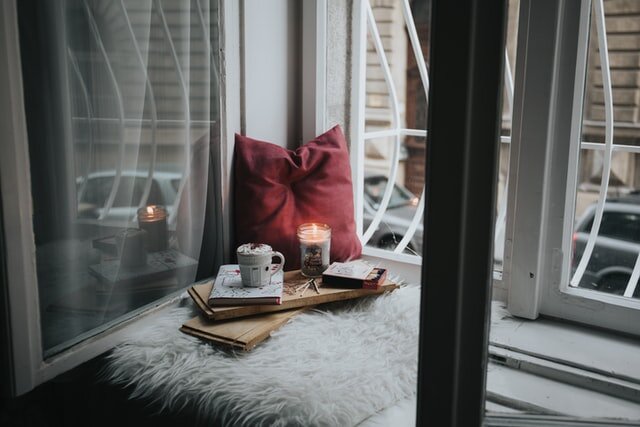
Of course, you can always turn to natural light. When it comes to reading, a window can beat any artificial lighting every time. Take a look at this window seat. With a sole throw pillow that adds a pop of color and a scented candle for the ambiance, it is ripe for reading.

via The best light for reading is natural light.

via The best light for reading is natural light.

Construct a built-in bench

Consider a built-in to make use of that awkward corner of your home that lingers under a slanted ceiling. What was once wasted space in your home is now a beautiful book nook with a daybed-sized built-in that lifts to provide tons of hidden storage space for your personal library, magazines, reading essentials, and blankets. Of course, if you live in an NYC apartment, checking with the local building department is a must. Unlike for some simple repairs, you’ll need to have permits and other similar paperwork handled before committing to any major renovation project.

Layer up

Speaking of cozy, pillows and throws are the formula. Steal a couple for your reading chair from the couch or the bed – the more, the better. The princess and the pea will not have anything on you and all of your layers of coziness. Moreover, this is a great way to add a splash of color to the area, especially if the walls of your reading room are neutral. Get creative and go crazy with textures and hues to brighten up the space. Oh, and don’t forget a nice area rug to keep warm under your feet while doing your favorite winter activity.

via Layers of fluff are key if you wish to create a cozy reading nook.

via Layers of fluff are key if you wish to create a cozy reading nook.

Get a chair that supports your body

Be it for hours or fifteen minutes, whenever you start turning pages, your body should be properly supported by the right chair. Down-filled, oversized armchairs are one of the favorites among those whose goal is to seriously cozy up with a new read. Lounge chairs wonderfully support your back, but if it takes more space than you can spare, go for a stylish wing chair, and snag a matching ottoman to put your feet up for a cozy bonus.

Sneak in some book storage

Any avid reader needs space to store all those volumes. So why not go with wall-to-wall bookshelves? Surrounding yourself with books yields both maximum convenience and that Beauty and the Beast vibe. If you don’t have a lot of space to work with, consider flanking your reading corner with a built-in bookshelf or some floating shelves to display your tomes.

via No reading nook is complete without a bookshelf.

via No reading nook is complete without a bookshelf.

If this still isn’t enough space, and you’re seriously thinking about decluttering books – we feel your pain! Book hoarding, however, can produce clutter, which is often a significant source of stress. And a relaxing reading nook is always tidy and organized. KonMari and the Crew are only a couple of the methods you can use to downsize your books, and if it so happens that you’re moving away, this is the perfect time to do some decluttering. If you hire a packing service, your movers can assist you if you need help packing unnecessary items. Then, you can start afresh when you move into your new home with a collection of well-loved books that are the source of joy and inspiration – not stress.

Add a personal touch

When you start to create a cozy reading nook, never forget to give it some character. Stop here, take a breath, and think it over. What makes you happy and soothed? Maybe it’s incorporating some sentimental items such as a photograph of your family or a beautiful piece of artwork your friend had painted for you. Perhaps it’s your college diploma or your favorite quote framed and hanging on your wall. Or maybe a few of your houseplants you love to take care of. Anything that is special and unique to you can give your space a personal touch.